On Sale March 9, 2027


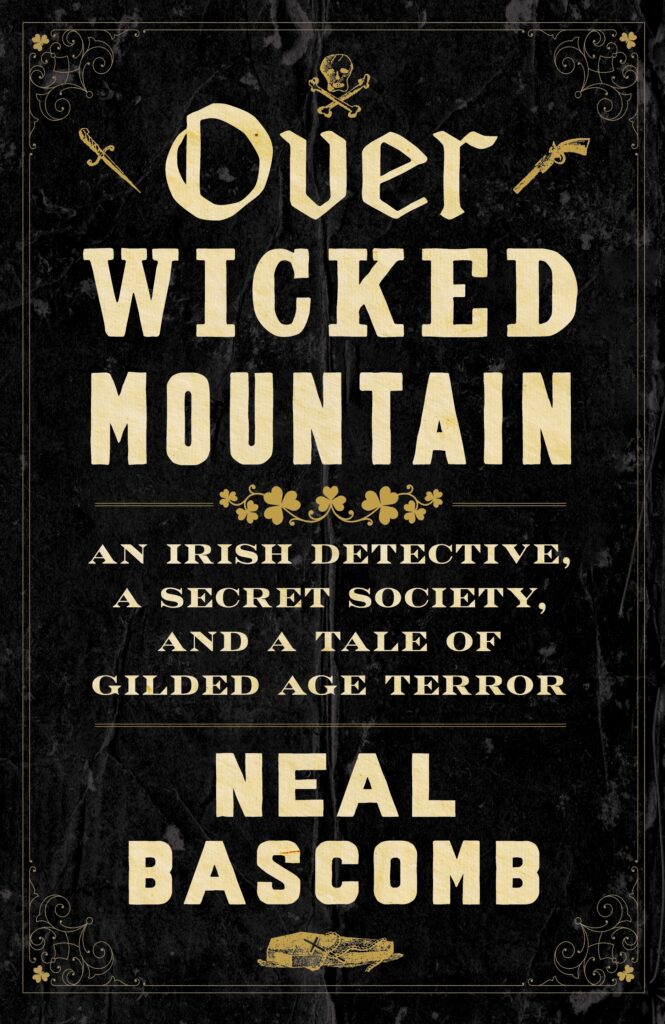
Over Wicked Mountain: An Irish Detective, a Secret Society, and a Tale of Gilded Age Terror
A taut and timely forgotten history—equal parts Peaky Blinders and The Departed—of the Molly Maguires, the Irish secret society that terrorized Gilded Age America, and the young immigrant detective who went undercover, alone, to bring them down. The first true-crime saga of the robber-baron age.
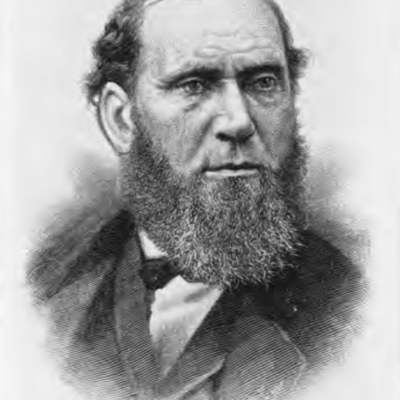
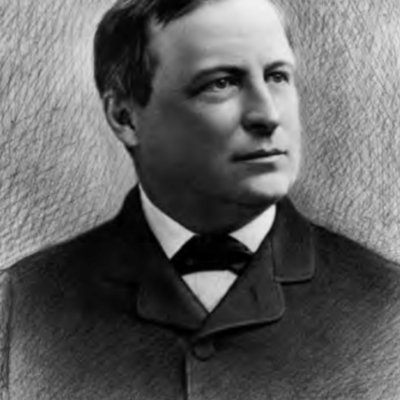
Pennsylvania, 1873. Franklin B. Gowen—thirty-five, silver-tongued, ruthless—is president of the Philadelphia & Reading Railroad and master of the anthracite coal that fires the nation. Only a miners’ union and its shadowy marshal arm, the Molly Maguires, stand in the way of his absolute control. For years, this secret Irish gang operating in the fearsome coal mountains has sabotaged the industry’s mines of “black gold” and brutally killed its bosses. Gowen hires Allan Pinkerton’s famed detective agency to destroy them, convinced that local law enforcement is too weak—and too corrupt—to win the fight.
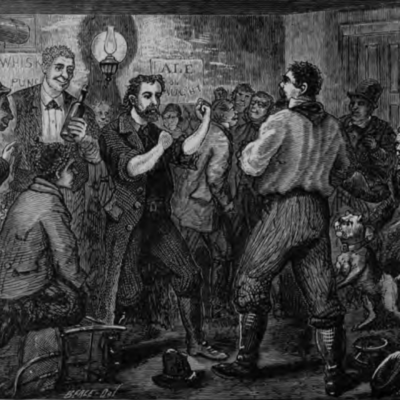
Enter James McParland, only a few years removed from Ireland. Pinkerton sends this rookie detective to infiltrate the Molly Maguires, root out its leadership, and end the chaos. It is a daunting mission, but with a mix of bravado, fisticuffs, and well-spun yarns, he enters their ranks. What begins as a singular assignment becomes a multi-year operation that will ultimately rivet the nation. But behind the blood-curdling headlines lies a more complicated truth. By his avarice and monopolistic obsession, Gowen provokes exactly the kind of violence among the starved, destitute miners that he claims to be ending. McParland finds himself caught in the middle of this industrial age war, his nerves and identity fraying as his life—and soul—hang in the balance.
Based on the real-life events that inspired Sir Arthur Conan Doyle’s final Sherlock Holmes mystery, Over Wicked Mountain is an American epic—and a story for our own age. It is an unsparing portrait of what justice looks like when the gap between rich and poor has grown too wide, and what happens when vengeance becomes the last resort of the oppressed.
Author Q & A
A Talk with Neal Bascomb, Author of OVER WICKED MOUNTAIN
What drew you to the story of the Molly Maguires?
Book ideas come from all sorts of places. Sometimes you go out fishing for them; this time, one landed at home. My daughter Charlotte was researching a high-school project on the “breaker boys” who worked in the coal mines of Pennsylvania, and that’s how I first learned about this story. It’s a Philadelphia story and a Pennsylvania story, which makes it about as homegrown as they come for me.
In the 1870s, eastern Pennsylvania was one of the wealthiest parts of the country. Ramshackle towns grew up around the mines. The people who dug that wealth out of the ground, many of them Irish and many of them just boys, saw very little of it, while the owners of these mines like Franklin Gowen became rich and powerful beyond measure. Charlotte’s project put these two disparate groups in front of me, and I wanted to know everything I could about their world.
What was detective work like before the FBI?
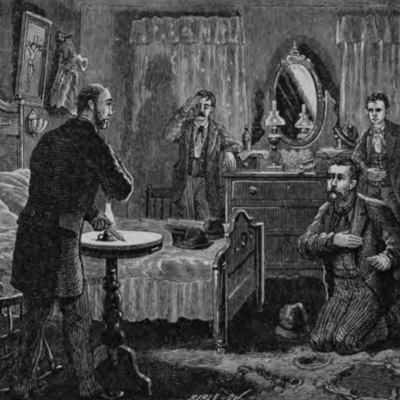
Before there was the FBI or the CIA, there were the Pinkertons. They were a private detective agency, and they developed and deployed many of the same techniques used today, without the help of telephones or the internet. James McParlan, the Pinkerton operative at the center of the book, went by the name Jim McKenna to infiltrate the Mollies, and he used the tricks that are now old-school spy trade to do it. Over Wicked Mountain gives readers a front-row seat to how he pulled it off, all the while keeping his coal baron bosses up to date.
There’s a catch, however. Because the Pinkertons were a private agency, they worked on behalf of those who could afford them, and not necessarily the State. At every step, McParland faced moral and ethical choices, and they were what fascinated me most as an author.
Have you always been a mystery fanatic?
Always. I’ve loved a good mystery for as long as I can remember. In fact, the first part of my career was as an editor in publishing, namely for Thomas Dunne Books of St. Martin’s Press. We lived and breathed mysteries there, and I cut my teeth editing whodunits of every sort.
So it’s amazing to me that I found a path into telling the true story of the last great Doyle mystery. Arthur Conan Doyle drew on the Molly Maguires and the Pinkerton man who infiltrated them for The Valley of Fear, the last of his Sherlock Holmes novels. Perhaps we end up where we begin.
Over Wicked Mountain is an Irish story. Why does it matter today?
Irish Americans were critical to the building of America. Today, we target immigrant populations as the source of our economic and societal problems. They’ve become the scapegoat for all types of ills, and in the 1870s the backlash against Irish immigrants was every bit the same.
Here was a people, most of them law-abiding and eager to build a new life in the United States, who were painted as savages and relegated to the worst and most dangerous jobs. Some struck back violently, like the Mollies. Others struggled lawfully, tooth and nail, no matter the perils, to find a place in this new world, like James McParland. America would not be what it is today without the work, dedication, and spirit of the Irish.
Are there parallels between the Gilded Age and today?
The setting for Over Wicked Mountain is the Gilded Age, when new technology, unregulated industry, and exploited immigrant labor made tremendous wealth possible for a few at the top while many struggled to make ends meet on low wages in dangerous jobs. The parallels to today’s “Golden Age,” as the President calls it, are striking.
Again, we’re in a period of upheaval. Tech oligarchs dominate the economy with advancements in AI, corruption is an increasingly regular occurrence, workers feel powerless in the face of AI while wage growth is outstripped by inflation, and immigrants are increasingly targeted with racist attacks. The Molly Maguires turned to violence driven by similar frustrations. We see echoes in the violent uprisings from students who feel hopeless in France and Italy, and in the vigilante targeting of pharma execs and others. There is much to be learned from how we made it through the first Gilded Age.
How has AI changed the way you write nonfiction?
It’s a mix of the good, the bad, and the ugly. When I began my first narrative nonfiction book 25 years ago, I would sit in the New York Public Library and scroll page by page through endless microfilm to find any mention of my subject, the skyscraper wars of New York. Today, I could do the same work in minutes that once took months. I can create a whole bibliography to read in seconds. Back then, I had boxes full of xeroxed copies of books, magazines, interviews, and the like, and I had to index them all by hand, which again took months. Now I can check a fact or draw on a description from digitized files I’ve uploaded, again in moments. It’s a tremendous boon to the research and writing process, especially in fact-checking.
But I fear this new age will also generate vast piles of “nonfiction” that are simply regurgitations of previous works, without the laborious but ultimately necessary process of tracking down new material, conducting interviews, and walking the ground where my characters once trod.
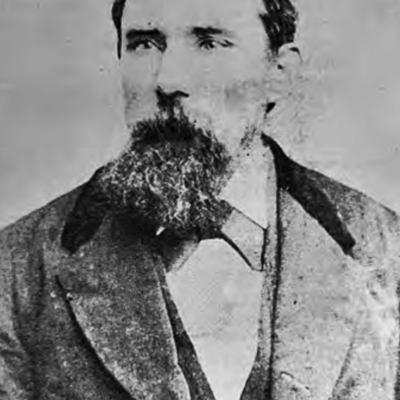
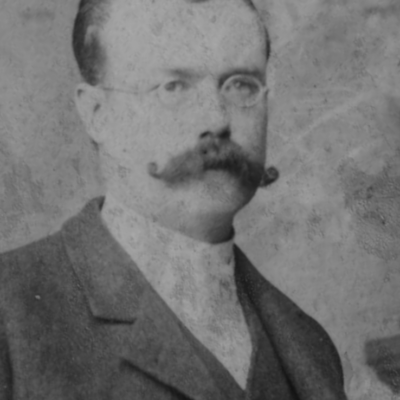 James McParlan, Undercover Detective with alias Jim “Mac” McKenna